Excavator Carrier Rollers: Essential Components for Undercarriage Stability
Excavators are built to tackle some of the toughest and most demanding tasks across construction, mining, and heavy-duty industries. The carrier roller is one of the critical components of an excavator’s undercarriage system, designed to ensure smooth movement, improve stability, and support the track chain’s functionality. This article will explore the role of carrier rollers, their design, function, types, and maintenance, as well as the importance of keeping this part of the machine in top condition.
What is an Excavator Carrier Roller?
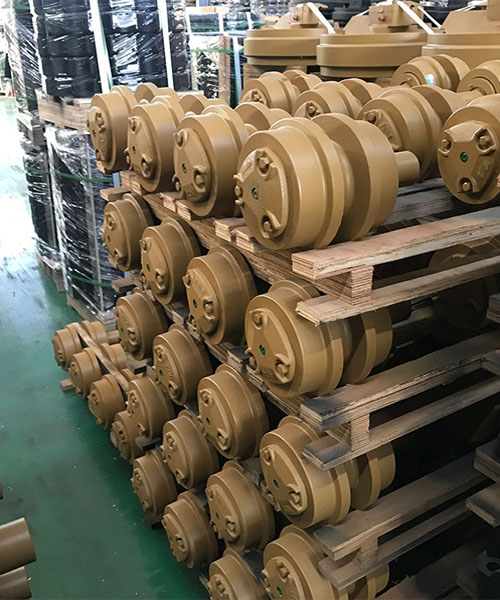
An excavator carrier roller is a key part of the undercarriage assembly, positioned to support the track chain at the top of the track, specifically between the sprocket and the track tensioning device. Carrier rollers work alongside other undercarriage components such as track rollers, idlers, and sprockets to help keep the track system properly aligned, maintain correct track tension, and support the excavator’s weight as it moves across the ground.
Carrier rollers are located towards the middle or rear section of the undercarriage and primarily serve to bear the weight of the track, reducing the stress on the track chain and preventing sagging or misalignment. These rollers play a vital role in ensuring that the excavator maintains optimal stability and performance, even in challenging working conditions.
Key Functions of the Excavator Carrier Roller
- Support and Stability:
- Carrier rollers help support the weight of the excavator’s track system, ensuring that the track chain stays in place and operates efficiently. By preventing the track from sagging or becoming misaligned, carrier rollers enhance the stability of the excavator on rough or uneven terrain. This also reduces the likelihood of operational issues such as track derailment or uneven wear.
- Track Alignment and Tension:
- Carrier rollers contribute to the alignment and tension of the tracks. Proper tension is essential to ensure that the track links remain engaged with the sprockets, allowing the machine to move smoothly. The carrier roller helps maintain this alignment by preventing the track from becoming too loose or too tight, both of which can result in poor performance and increased wear on the undercarriage components.
- Reducing Wear and Tear:
- By evenly distributing the weight of the excavator, carrier rollers reduce the stress on other components of the track system, such as the track rollers, sprockets, and track links. This helps to extend the lifespan of the entire undercarriage system, preventing the need for frequent repairs or replacements.
- Ensuring Smooth Operation:
- Carrier rollers work in conjunction with other undercarriage components to ensure that the excavator operates smoothly and efficiently. By minimizing the friction between the track and the ground, carrier rollers help maintain steady movement, which is particularly important for tasks requiring precision, such as grading or digging.
Types of Excavator Carrier Rollers
Carrier rollers come in various sizes, designs, and materials, depending on the specific needs of the excavator and the working conditions. Choosing the right carrier roller type ensures optimal performance, durability, and safety for the machine. Below are the main types of carrier rollers:
- Single Carrier Rollers:
- Single carrier rollers feature a simple design with a single roller on each side of the track. These are commonly used in standard excavators for light to medium-duty applications where the machine operates on relatively even ground. Single carrier rollers are efficient and cost-effective, providing sufficient support for the majority of general construction tasks.
- Double Carrier Rollers:
- Double carrier rollers feature two rollers on each side of the track and provide additional support, especially for heavier or larger excavators. These rollers are often used in heavy-duty machines that work on rough or rocky terrain, where greater load-bearing capacity is required. Double carrier rollers offer enhanced stability and durability under more extreme operating conditions.
- Heavy-Duty Carrier Rollers:
- Heavy-duty carrier rollers are designed for extreme applications, such as mining, quarrying, or working in harsh, abrasive environments. These rollers are built with reinforced materials and thicker walls to withstand high-impact loads, heavy machinery weight, and abrasive surfaces. Heavy-duty carrier rollers help ensure that the excavator remains operational in the most challenging conditions.
- Rubber Carrier Rollers:
- Rubber carrier rollers are typically found on compact or mini excavators. These rollers are quieter and gentler on the surface, making them ideal for urban environments or projects where minimizing damage to paved or delicate surfaces is crucial. They also provide added shock absorption, reducing vibration and noise levels, making them suitable for use in residential or noise-sensitive areas.
- Steel Carrier Rollers:
- Steel carrier rollers are made from high-strength steel or alloy steel, providing durability and wear resistance in heavy-duty applications. These rollers are common in larger or industrial excavators working in mining, forestry, or other rugged industries where the undercarriage faces constant stress and extreme conditions.
Materials Used in Carrier Rollers
Carrier rollers are typically made from durable materials that can withstand constant wear and the harsh conditions that excavators face. The most common materials used include:
- High-Carbon Steel: High-carbon steel is commonly used for carrier rollers due to its strength, toughness, and resistance to wear. It provides excellent performance in demanding applications and is well-suited for heavy-duty tasks.
- Alloy Steel: Alloy steel is another material used in heavy-duty carrier rollers, offering additional strength, fatigue resistance, and impact protection. It is ideal for applications involving heavy machinery or challenging terrain.
- Rubber: Rubber or rubberized materials are used for compact or mini excavator carrier rollers, offering flexibility, shock absorption, and a quieter operation. Rubber carrier rollers are typically designed for lighter-duty applications and urban environments.
Importance of Carrier Rollers in Excavator Performance
- Optimizing Excavator Stability:
- Carrier rollers are crucial for maintaining the excavator’s stability, especially when operating on uneven or rough terrain. They prevent the track from sagging or becoming misaligned, which could affect the overall balance and traction of the machine.
- Reducing Maintenance Costs:
- By ensuring that the track system stays properly aligned and tensioned, carrier rollers reduce the wear and tear on other parts of the undercarriage, including the track rollers, sprockets, and track links. This helps reduce the frequency of repairs and minimizes downtime, leading to lower overall maintenance costs.
- Improving Machine Lifespan:
- Properly functioning carrier rollers help extend the lifespan of the excavator’s undercarriage. With reduced wear on other components and optimized track alignment, the overall durability of the machine is improved, which can save on costly replacements and repairs.
- Increasing Efficiency:
- A well-maintained carrier roller system helps ensure that the excavator operates at peak efficiency, with smooth and consistent track movement. This is particularly important for tasks that require precision or involve challenging ground conditions, such as trenching or demolition.
Maintenance and Replacement of Carrier Rollers
To ensure that the excavator continues to operate effectively, it’s essential to maintain and inspect the carrier rollers regularly. Here are some key maintenance tips:
- Regular Inspections:
- Inspect the carrier rollers periodically for signs of wear, cracks, or misalignment. Look for excessive damage to the roller surface, which can indicate that the roller is no longer functioning optimally.
- Lubrication:
- Keep the carrier rollers well-lubricated to reduce friction and wear. Proper lubrication ensures smooth movement and minimizes stress on the roller and surrounding components.
- Cleaning:
- Clean the carrier rollers regularly to remove dirt, debris, and other materials that could cause blockage or friction. Cleaning also helps ensure that the roller system operates smoothly and efficiently.
- Replacement:
- If the carrier rollers show signs of severe wear or damage, it is important to replace them as soon as possible to prevent further damage to the track system. Regularly replacing worn or damaged carrier rollers can prevent costly repairs down the line.
CATERPILLAR Carrier Roller OEM: 6K9879, 6K9880, 6Y1781, 4I7345, 6Y5323, CR6596, 861934, 277-8576, 8E5600, 175-3274,
KOMATSU Carrier Roller OEM: 103-30-00010, 111-30-00260, 14X-30-00141, 155-30-00234, 175-30-00513, 20T-30-00150, 20T-30-00050, 20T-30-00151, 203-30-00120, 203-30-53001, 203-30-00150, 20Y-30-00022, 20Y-30-00481, 208-30-00320, 207-30-00320, 208-30-00510, 21M-30-0020A, 21N-30-00160, 21T-30-00220
HITACHI Carrier Roller OEM: 9062403, 9108841, 9153288, 9061288, 9092400, 9105749, 9134245, 9062406, 9089636, 9178333, 9062405, 9149839, 9099140, 4349516, 4359516, 9109492, 4349517, 9078675, 4349518, 9066586, 9066422, 4349519, 9160680, 9191054, 9129347.
HYUNDAI Carrier Roller OEM: 83E6-2003, 81EM-10030-01, E181-2002, 81E9-2003, 81E7-0016.
Kobelco Carrier Roller OEM: 24100N6420F1, YN64D01022F1, 24100N6603F1, 24100J12446F1, 24100N8640F1, LB64D01001F1, 24100N7035F3, LC64D00005F1, 24100N6291F1, 24100N6506F1, LP64D01006F1, YN64D01013F1, 24100N10084F1, 241006291F1, LE64D01006F1, LP64D01003F6.
VOLVO Carrier Roller OEM: 1181-00440, 1181-01100, 14370174, 14520149, 14215476, 1181-00020, 14260871, 1181-01011, 1081-01820