The Complete Guide to Center Cutting Edges: Essential for Efficient Excavation
When it comes to excavation and earth-moving tasks, having the right equipment is essential to ensure efficiency and precision. One often overlooked but crucial part of your heavy machinery is the center cutting edge. This component, although small compared to other parts, plays a vital role in improving the performance and longevity of your excavator or loader.
In this article, we’ll explore the importance of center cutting edges, their functions, types, materials, and maintenance tips to help you make the most of this essential tool.
What is a Center Cutting Edge?
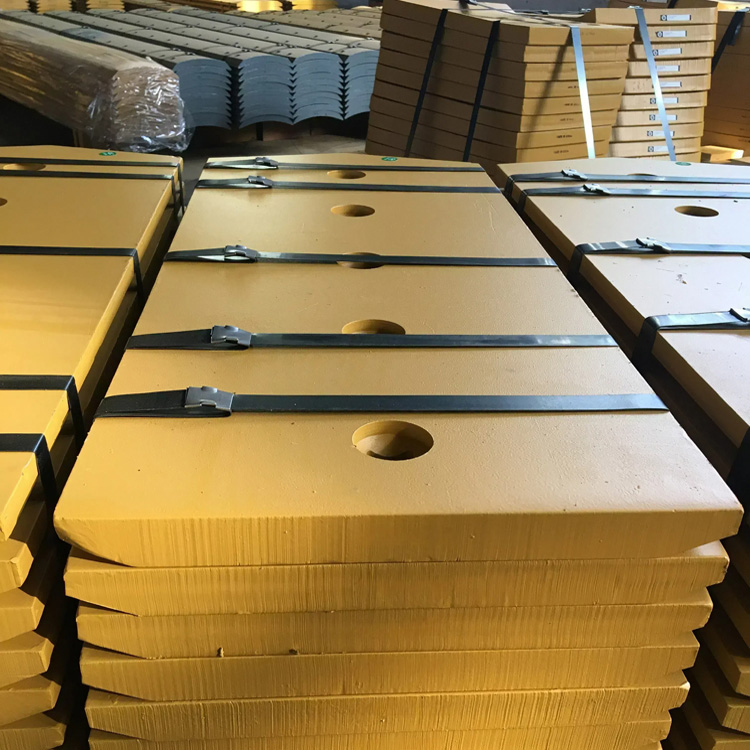
A center cutting edge is a key component attached to the bucket of an excavator, loader, or other heavy machinery. It is positioned at the center of the bucket, providing additional cutting power and stability for digging and excavation tasks. The center cutting edge is designed to work in conjunction with the other cutting edges on the bucket to ensure smooth and efficient digging, especially when dealing with harder materials or more challenging terrain.
Why is the Center Cutting Edge Important?
The center cutting edge plays several key roles in improving the performance of your heavy equipment:
- Enhanced Digging Power: The center cutting edge allows the bucket to engage materials more effectively, especially for deeper or tougher digging. It helps reduce the strain on other parts of the bucket and ensures better penetration.
- Improved Control and Precision: The center placement of the edge helps provide better balance and control when digging, especially in areas that require precision, such as grading or trenching.
- Reduced Wear and Tear: By providing added cutting power and stability, the center cutting edge helps to distribute wear evenly across the entire bucket, prolonging the life of both the edge and the bucket itself.
- Cost-Effective: Replacing a worn or damaged center cutting edge is far less expensive than replacing the entire bucket. Proper maintenance can save significant repair costs over time.
Types of Center Cutting Edges
There are several different types of center cutting edges available, each designed to meet specific excavation needs. Here are some of the most common types:
- Standard Center Cutting Edges: These are used for general-purpose excavation and are suitable for working in softer soils or loose materials. They offer a good balance of cost and performance for everyday tasks.
- Heavy-Duty Center Cutting Edges: These are designed for tougher applications where the excavation involves harder materials like compacted soil, gravel, or even rock. Heavy-duty center cutting edges are made from stronger materials that provide enhanced durability and longer wear life.
- Rock Center Cutting Edges: Specifically designed for use in rocky environments, rock cutting edges have a more robust build to withstand the stress of breaking through tough, abrasive surfaces. These edges may have reinforced tips or be made from materials like tungsten carbide for maximum strength.
- Bolt-On Center Cutting Edges: Bolt-on center cutting edges allow for easy replacement when the edge becomes worn or damaged. These are ideal for machines that see frequent use in varying conditions, as they can be swapped out quickly and cost-effectively.
Materials Used in Center Cutting Edges
The material used in manufacturing the center cutting edge is crucial to its durability, performance, and longevity. The most common materials used for center cutting edges include:
- High-Carbon Steel: High-carbon steel is widely used for standard cutting edges because of its strength and hardness. It is ideal for general-purpose applications and offers a good balance of cost and performance.
- Alloy Steel: Alloy steel cutting edges are commonly used in heavy-duty applications. This material offers superior strength and resistance to wear, making it ideal for more demanding jobs like digging in rocky or abrasive conditions.
- Tungsten Carbide: Tungsten carbide is one of the hardest materials available, and it is often used for rock cutting edges or in environments where extreme durability is needed. Tungsten carbide edges provide outstanding wear resistance, making them ideal for very harsh or high-impact conditions.
- Wear-Resistant Steel: Wear-resistant steels like Hardox are also used for center cutting edges, particularly in industries where the equipment faces extreme stress, such as mining and heavy construction. These materials are tough, resilient, and designed for long-term performance.
Common Applications of Center Cutting Edges
Center cutting edges are used in a variety of industries and for different applications. Some of the most common include:
- Excavation: The primary application for center cutting edges is excavation. They help increase the efficiency of digging and provide better control over the machine while handling tough materials like rock, gravel, or compacted soil.
- Grading: When leveling or grading surfaces, the center cutting edge helps achieve a smooth, even surface by providing additional cutting power. This is particularly important for road construction and landscaping projects.
- Trenching: For precise trenching operations, the center cutting edge provides the required stability and control to ensure that trenches are cut accurately, even in difficult ground conditions.
- Demolition and Site Preparation: During demolition or site preparation tasks, the center cutting edge allows for efficient digging and material handling, enabling quicker site clearance and leveling.
How to Maintain and Replace a Center Cutting Edge
Proper maintenance is essential to ensure that your center cutting edge continues to perform effectively. Here are some tips for keeping your center cutting edge in top shape:
- Regular Inspections: Inspect your center cutting edge regularly for signs of wear, cracks, or damage. The center cutting edge is subjected to a lot of force, so it’s essential to check it after heavy use.
- Sharpening: If the cutting edge becomes dull, consider sharpening it to restore its effectiveness. This is especially important for standard and heavy-duty center cutting edges that deal with softer or more compacted materials.
- Proper Lubrication: Ensure all moving parts, such as the attachment points and pivoting mechanisms, are properly lubricated to reduce friction and wear on the cutting edge.
- Timely Replacement: Once the cutting edge is significantly worn or damaged, replace it promptly to avoid reducing the efficiency of your equipment and to prevent potential damage to the bucket.
Caterpillar Center Cutting Edge OEM list: 106-6420, 6I8364, 127-7429, 106-6378, 6I8367, 127-7432, 6I8365, 127-7433, 106-6421, 106-6423, 6I8368, 127-7430, 6I8366, 127-7431, 135-9548, 135-9549, 106-6377, 9W8250, 9W8249, 9W5736, 4T7185, 9W5731, 4T7186, 9W5735, 4T7187, 9W5732, 4T7188, 9W5733, 4T7190, 4T6589, 1U1447, 104-5841, 4T6594, 1U1446, 109-9212, 100-4047, 1U0762, 100-4046, 100-4045, 4T6588, 1U1449, 9W3677, 9W3678, 9W3676, 4T6590, 1U1448, 4T6592, 1U1445, 4T7145, 4T7144, 4T7143, 4T7142, 4T7141, 107-8586, 9W1375, 4T5273, 139-9230, 1U2406, 1U0592, 1U1478, 9J0292, 1U1476, 100-6668, 1U1909, 1U0593, 107-3381, 1U2407, 1U0601, 132-1034, 1U2409, 1U2413, 132-1032, 1U2412, 132-1031, 1U1473, 9J6125, 1U1471, 1U0591, 1U0600, 1U1479, 9J0293, 1U2411, 1U2414, 132-1030, 1U2408, 1U1470, 132-1028, 1U0599, 1U2410, 1U1469, 132-1029, 1U1475, 1U1531, 7K3890, 4T9126, 4T9125, 4T9128, 4T9127, 7T5963, 7T5961, 4T9185, 7T5960, 7T5964, 7T5962, 140-7601, 107-3746, 1U0292, 8A8444, 8E4567, 1U0607, 1U1467, 9J0291, 1U0295, 4T9563, 1U0293, 1U0294, 1U0605, 1U1464, 132-1027, 1U1465, 132-1026, 4T2915, 4T0806, 4T2913, 1U2357, 4T8796, 4T2802, 9W9943, 4T2911, 4T0803, 4T2912, 4T2919, 9J6664, 109-9215, 4T2918, 9J3265, 9W6747, 4T2914, 1U2352, 9W9944, 4T2910, 4T0804, 118-7110, 9W8215, 4T8353, 4T8078, 2V2162, 4T8372, 5J6961, 4T8085, 9V1757, 4T8082, 9V3532, 4T8069, 4T8071, 5J6953
Komatsu Center Cutting Edge OEM list: 419-815-A120, 418-815-A110, 419-815-A110, 415-815-1110, 415-823-1311, 415-823-1321, 416-815-1110, 416-815-1210, 417-815-1210, 417-815-1110, 417-823-1310, 418-815-1210, 418-823-1310, 419-815-1211, 419-823-1310, 421-815-1111, 421-815-2110, 423-815-1111, 423-815-1211, 423-823-1310, 424-815-1111, 424-815-A140, 425-815-1110, 425-815-A310, 426-815-1110, 363-70-21190, 418-815-1210, 421-815-1211, 421-815-2110, 416-815-1310, 421-815-2211, 425-815-1310, 424-70-H2D80, 425-838-1110, 362-972-1111, 363-70-21190, 425-815-2220, 12Y-72-11230, 12Y-72-11220.
John Deere Center Cutting Edge OEM list: 11156766, T156530, T198126, T157492, T167828, T101638, T150517, T84194, T120980, T120979, T162841, T149152, T224178, T209348, T157311, T166454, T204082, T195673, T230656, T230666, T230665, T126774, T149153, 11156585, 11111761, 11111776, 11111775, 112946A1, 185506A1, 121920A1, 360940A1, 360941A2, 372081A1, 372082A2, 332449A1,